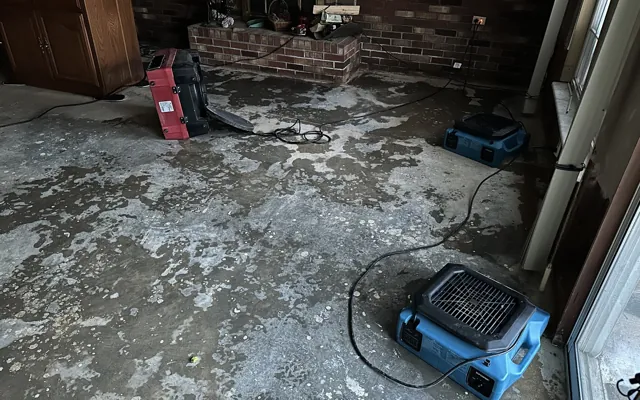
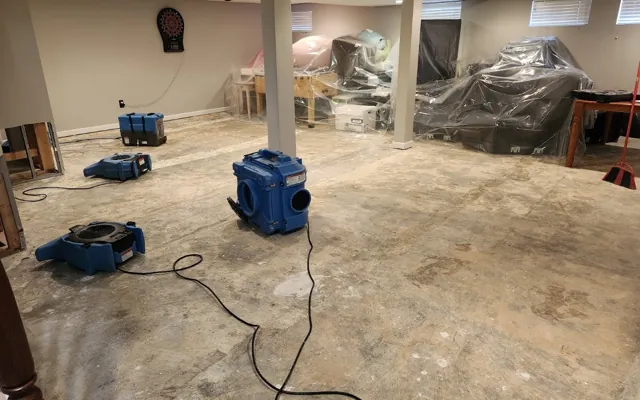
Generational homes in Highland Park carry decades-old plumbing and decades-old risks. The IICRC crew dries your basement in days, not weeks, with proven methods and local know-how.

Crews locate where water enters and reroute future runoff around the foundation while pumping standing water into trucks, prioritizing the deepest low spots first.
Crews examine walls and subfloors for splits and softening caused by water, removing saturated insulation and settling particulate that will trap moisture if left behind.
Highland Park homes with older construction need longer drying cycles. Crews stay on site with dehumidifiers and air movers, testing moisture in walls daily until the entire structure is verified dry.

Storm and flood cleanup in Highland Park generally runs $1,500 to $10,000 or more, depending on water depth, how long it sat, and whether flooring, drywall, or mechanical systems need replacement. Standard homeowner's policies typically cover storm-driven water intrusion, though separate flood insurance may apply near the rivers, and crews help clarify which applies.
Highland Park families stay put, raising kids in the same 1900s house their parents bought, so plumbing inside often dates back that far. A deep freeze splits supply lines hidden in uninsulated walls overnight, and mature trees near the park push storm runoff toward basement windows never sealed for that kind of pressure. The homes here are loved; crews treat them with care. Highland Park's sloped terrain and mature tree cover drive runoff toward basements. Original supply lines, often uninsulated, burst during Pittsburgh's hard freeze cycles. Basement windows sealed decades ago don't hold modern storm intensity. From Highland Park, crews also cover nearby Shadyside, Squirrel Hill, Greenfield, Point Breeze, Mount Washington, Bloomfield. See every neighborhood and town on the full service area page.
See all areas servedEvery loss is photographed, measured, and logged from the first visit, so the paperwork holds up with your insurance carrier.
Technicians follow recognized IICRC drying standards and prove the work with daily moisture readings, not guesswork.
Emergency dispatch any hour of the day or night, with a real crew on the way, not a callback in the morning.
A real crew dispatched any hour, not a callback in the morning.
Trained technicians following recognized IICRC drying standards.
Truck-mounted, portable, and submersible for any size loss.
The loss is documented and billed to the carrier directly.
Insulate pipes in unheated walls and crawlspaces with foam sleeves before winter. Highland Park's hard freezes can burst even newer copper lines if not protected. Heat tape on vulnerable lines also works. Crews can point out high-risk areas during an assessment.
Original windows in older Highland Park homes were not sealed for modern rainstorms. Upgrading to newer, better-sealed windows helps. In the interim, slope the ground away from windows and keep gutters clear so runoff doesn't pool against the foundation. Adding window wells with drains also reduces intrusion.
Crews are on call 24 hours a day and can be on the way to Highland Park within the hour.
Call (412) 866-1481