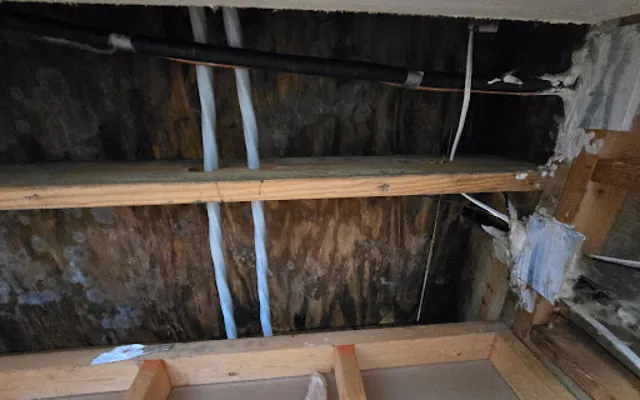
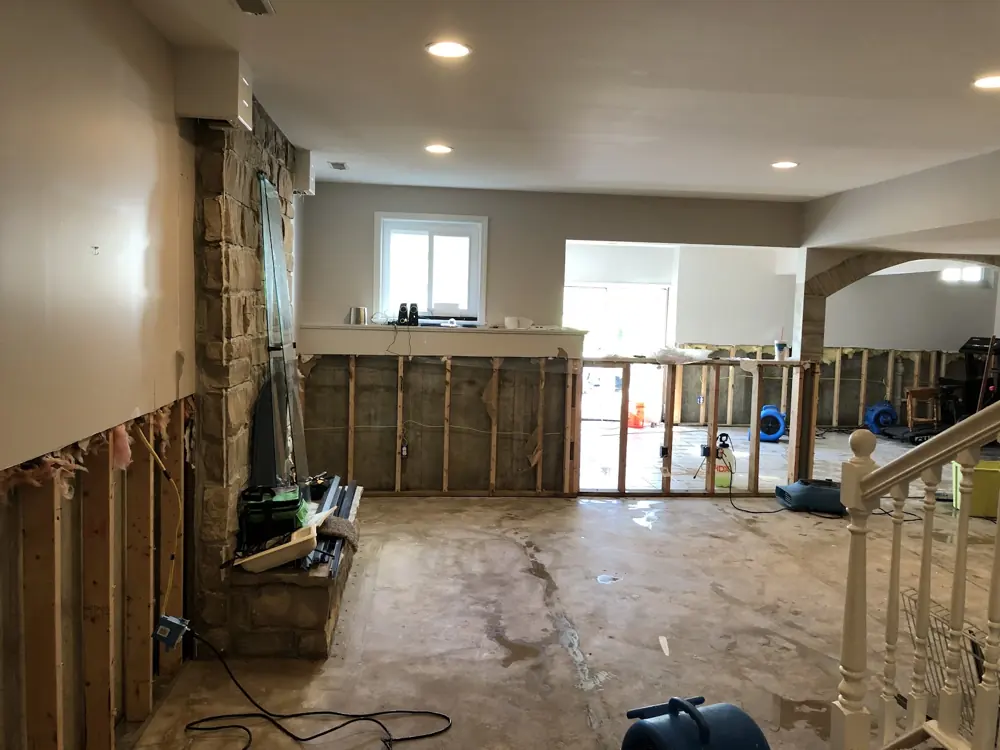
Thick ice along the eaves of a Pittsburgh roof forces meltwater back under the shingles and into the attic and ceilings below. Absolute responds within about an hour, IICRC-standard, to extract water and dry your home.

Crews check the extent of ice dam intrusion into the attic, insulation, and any affected ceiling below.
Standing water and saturated insulation in the attic are removed to stop the damage from spreading further.
Air movers and dehumidifiers dry the roof deck, rafters, and any affected ceiling with daily moisture checks.
Crews repair insulation, drywall, and roofing as needed, and can recommend ventilation improvements to reduce future ice dams.

While help is on the way, these first steps, done only where it is safe, limit the damage and protect the insurance claim.
Shut the supply off at the source, or close the home's main valve if the source is not obvious. Stopping the flow limits the damage more than anything else.
Switch off electricity to the affected area, but only if the breaker can be reached without standing in or touching the water.
Get a crew dispatched right away. The sooner extraction and drying begin, the more flooring, drywall, and belongings can be saved.
Take photos and a short video of the water and the affected rooms before anything is moved, so the insurance claim starts strong.
Ice dam water damage cleanup in Pittsburgh typically runs $1,200 to $7,000, depending on how much insulation and ceiling area was affected and whether the intrusion happened repeatedly over a long cold stretch. Larger or older roofs with less attic insulation tend toward the higher end. Most homeowner policies cover sudden ice dam damage, and crews document the event for your claim.
Crews reach Pittsburgh and the Pittsburgh metro fast, from Squirrel Hill and Shadyside to Bloomfield, Lawrenceville, Mount Washington, and nearby Mount Lebanon and Bethel Park. See the full list on the areas served across Pittsburgh page.
See all areas servedEvery loss is photographed, measured, and logged from the first visit, so the paperwork holds up with your insurance carrier.
Technicians follow recognized IICRC drying standards and prove the work with daily moisture readings, not guesswork.
Emergency dispatch any hour of the day or night, with a real crew on the way, not a callback in the morning.
A real crew dispatched any hour, not a callback in the morning.
Trained technicians following recognized IICRC drying standards.
Truck-mounted, portable, and submersible for any size loss.
The loss is documented and billed to the carrier directly.
Ice dams typically point to heat loss through the attic, whether from insufficient insulation, poor ventilation, or both. Warm air escaping into the attic melts roof snow that then refreezes at the colder eaves.
Careful removal with a roof rake from the ground is sometimes possible for smaller dams, but climbing onto an icy roof or chipping at ice directly can cause injury or shingle damage, so professional help is safer for larger dams.
Look for ceiling stains, damp attic insulation, or a musty smell near the attic hatch during or after a cold stretch. Water can be trapped in the attic for days before it shows up as a visible stain.
Most homeowner policies cover sudden interior water damage caused by an ice dam, though repeated ice dam damage from an unaddressed underlying insulation problem may draw more scrutiny from an adjuster.
Improving attic insulation and ventilation is the most effective long-term fix, since it keeps the roof deck cold and even, reducing the melt-refreeze cycle that builds ice dams in the first place.
Pittsburgh crews are on call 24 hours a day, local and fast, and can be on the way within the hour.
Call (412) 866-1481