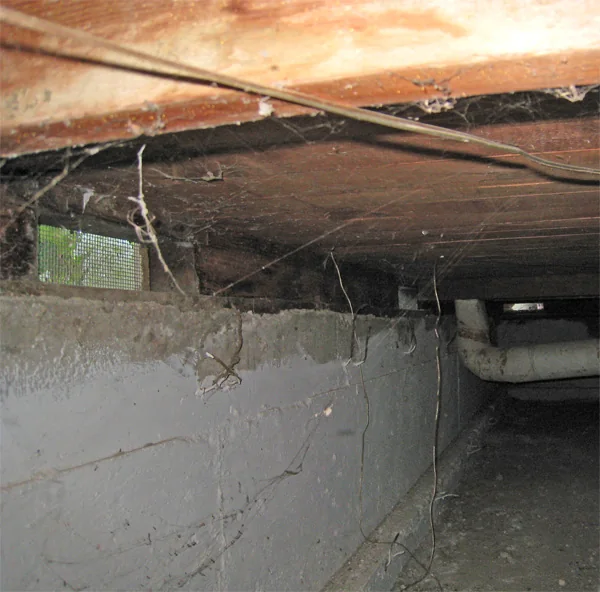
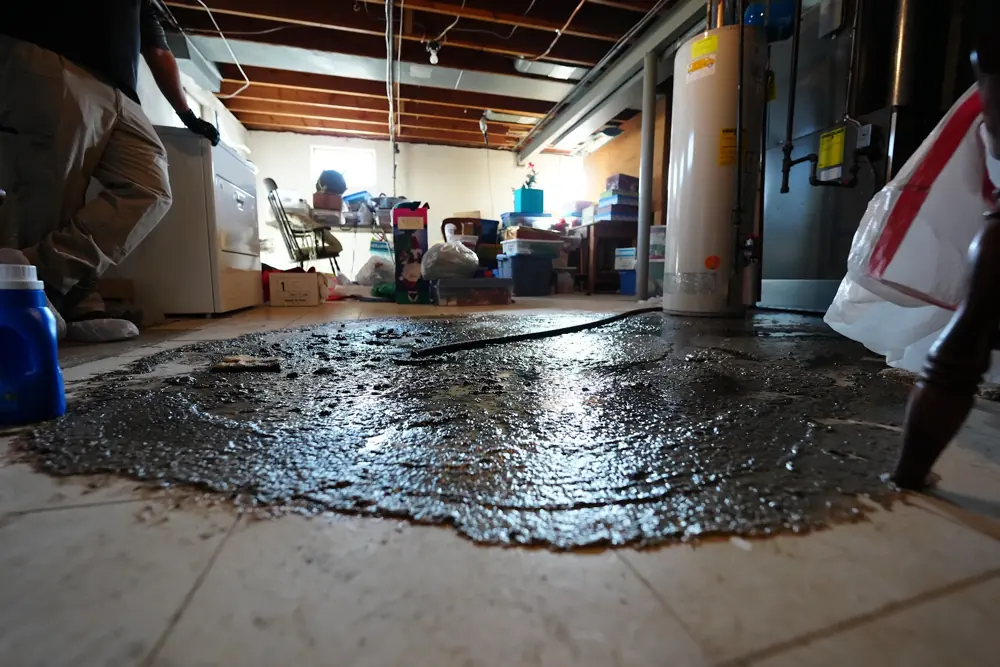
Hillside runoff and high water tables push moisture into Pittsburgh crawlspaces year round, rotting joists you cannot see from inside. Absolute responds within about an hour, IICRC-standard, to extract water and dry the space properly.

Crews enter or scope the crawlspace to assess standing water depth, joist condition, and the likely water source.
Pumps and wet vacuums remove standing water from the crawlspace floor, working around piers and ductwork.
Dehumidifiers and air movers dry joists, subfloor, and the crawlspace floor with moisture checks over several days.
Damaged joists or subfloor sections are repaired, and crews can recommend a vapor barrier or sump system for the space.

While help is on the way, these first steps, done only where it is safe, limit the damage and protect the insurance claim.
Shut the supply off at the source, or close the home's main valve if the source is not obvious. Stopping the flow limits the damage more than anything else.
Switch off electricity to the affected area, but only if the breaker can be reached without standing in or touching the water.
Get a crew dispatched right away. The sooner extraction and drying begin, the more flooring, drywall, and belongings can be saved.
Take photos and a short video of the water and the affected rooms before anything is moved, so the insurance claim starts strong.
Crawlspace water removal in Pittsburgh generally runs $1,000 to $5,500, depending on the size of the space, how much standing water is present, and whether joists or subfloor need repair. Ongoing hillside seepage may call for a drainage or sump solution on top of extraction. Insurance coverage depends on the cause, and crews document conditions clearly for your claim.
Crews reach Pittsburgh and the Pittsburgh metro fast, from Squirrel Hill and Shadyside to Bloomfield, Lawrenceville, Mount Washington, and nearby Mount Lebanon and Bethel Park. See the full list on the areas served across Pittsburgh page.
See all areas servedEvery loss is photographed, measured, and logged from the first visit, so the paperwork holds up with your insurance carrier.
Technicians follow recognized IICRC drying standards and prove the work with daily moisture readings, not guesswork.
Emergency dispatch any hour of the day or night, with a real crew on the way, not a callback in the morning.
A real crew dispatched any hour, not a callback in the morning.
Trained technicians following recognized IICRC drying standards.
Truck-mounted, portable, and submersible for any size loss.
The loss is documented and billed to the carrier directly.
A musty smell in the home, spongy or uneven flooring above the crawlspace, or visible condensation on ductwork are common signs. A direct look or camera inspection of the crawlspace confirms whether standing water is present.
Yes, over time. Standing water and chronic dampness rot wood joists and subfloor, and can weaken the structural support for the floor above if left unaddressed for months or years.
Crews do both. After extraction and drying, crews can install or replace a vapor barrier and recommend drainage or sump improvements to keep the crawlspace dry going forward.
It depends on the cause. Sudden events like a burst pipe are usually covered, while gradual seepage from grading or a missing vapor barrier is often considered a maintenance issue. Crews document conditions to support whichever applies.
Most crawlspaces dry in 3 to 7 days depending on size, ventilation, and how saturated the soil and joists were. Crews use moisture meters on the wood structure to confirm before considering the job complete.
Pittsburgh crews are on call 24 hours a day, local and fast, and can be on the way within the hour.
Call (412) 866-1481