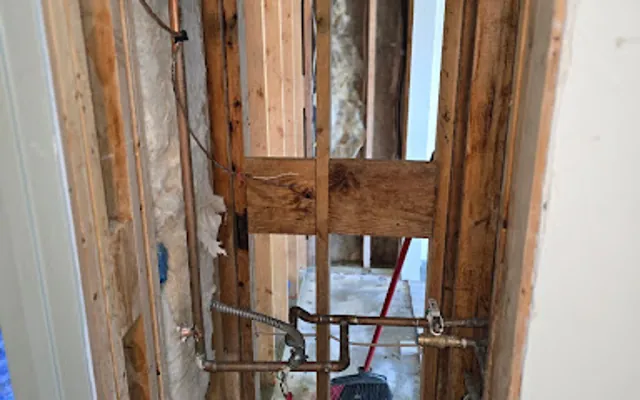
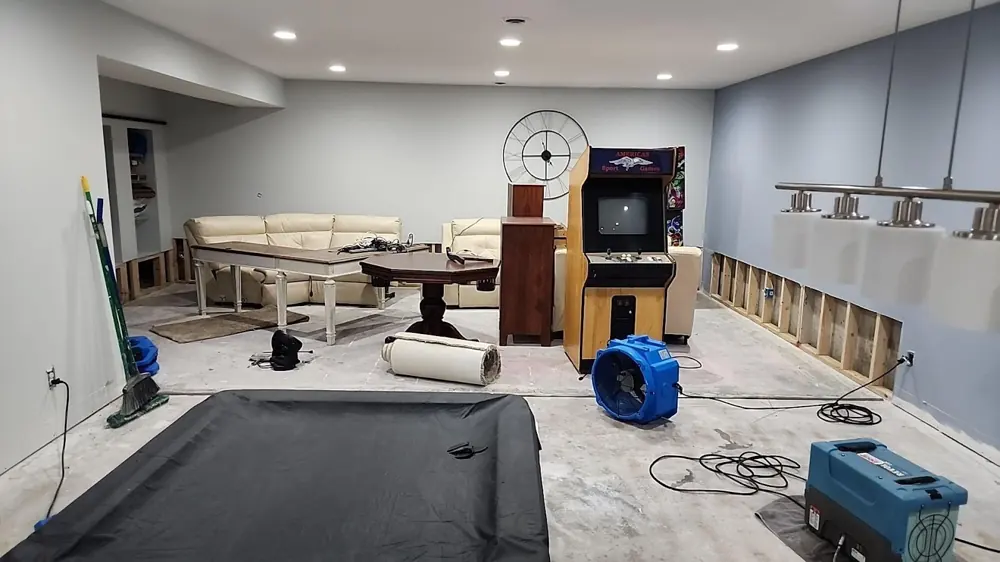
Pittsburgh's freeze thaw winters put real strain on pipes running through exterior walls, attics, and crawlspaces. Absolute responds within about an hour, IICRC-standard, to extract water and dry your home once a frozen pipe fails.

Crews confirm the water source is isolated and check for any additional frozen sections still at risk of failing.
Standing water is removed from floors, walls, and any affected ceilings using appropriate extraction equipment.
Air movers and dehumidifiers dry framing, insulation, and drywall cavities with daily moisture tracking.
Crews repair damaged materials and recommend pipe insulation or heat tape to prevent a repeat freeze.

While help is on the way, these first steps, done only where it is safe, limit the damage and protect the insurance claim.
Shut the supply off at the source, or close the home's main valve if the source is not obvious. Stopping the flow limits the damage more than anything else.
Switch off electricity to the affected area, but only if the breaker can be reached without standing in or touching the water.
Get a crew dispatched right away. The sooner extraction and drying begin, the more flooring, drywall, and belongings can be saved.
Take photos and a short video of the water and the affected rooms before anything is moved, so the insurance claim starts strong.
Frozen pipe water damage cleanup in Pittsburgh typically runs $2,000 to $9,000, depending on how much water escaped once the pipe thawed and how many rooms were affected. Cost climbs when the break happened in an exterior wall serving multiple fixtures. Homeowner insurance generally covers sudden freeze related pipe failures, and crews document the timeline for your claim.
Crews reach Pittsburgh and the Pittsburgh metro fast, from Squirrel Hill and Shadyside to Bloomfield, Lawrenceville, Mount Washington, and nearby Mount Lebanon and Bethel Park. See the full list on the areas served across Pittsburgh page.
See all areas servedEvery loss is photographed, measured, and logged from the first visit, so the paperwork holds up with your insurance carrier.
Technicians follow recognized IICRC drying standards and prove the work with daily moisture readings, not guesswork.
Emergency dispatch any hour of the day or night, with a real crew on the way, not a callback in the morning.
A real crew dispatched any hour, not a callback in the morning.
Trained technicians following recognized IICRC drying standards.
Truck-mounted, portable, and submersible for any size loss.
The loss is documented and billed to the carrier directly.
Freezing water inside a pipe cracks the pipe wall under pressure, but the crack often does not leak until the ice thaws and water can actually flow through the break, which is why damage frequently appears after temperatures rise.
Pipes in exterior walls, unheated attics, crawlspaces, and garages are the most exposed, especially in older homes with less insulation around the plumbing than modern construction typically has.
Shut off the water supply to that line if possible, open cabinet doors to let warm air reach the pipe, and call for help before applying direct heat, since a still-freezing pipe can crack under pressure at any point.
Most policies cover sudden pipe failure from freezing, though some require that you took reasonable steps to keep the home heated or shut off water if it was vacant. Crews document the circumstances to support your claim.
Insulating exposed pipe runs, sealing drafts near plumbing, and keeping the thermostat at a consistent minimum temperature even when away all reduce freeze risk significantly in Pittsburgh's climate.
Pittsburgh crews are on call 24 hours a day, local and fast, and can be on the way within the hour.
Call (412) 866-1481