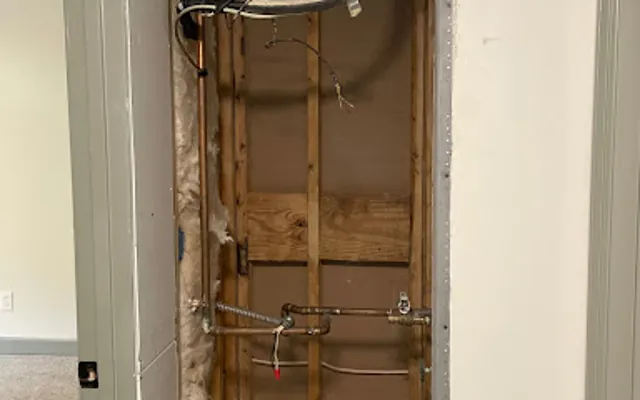
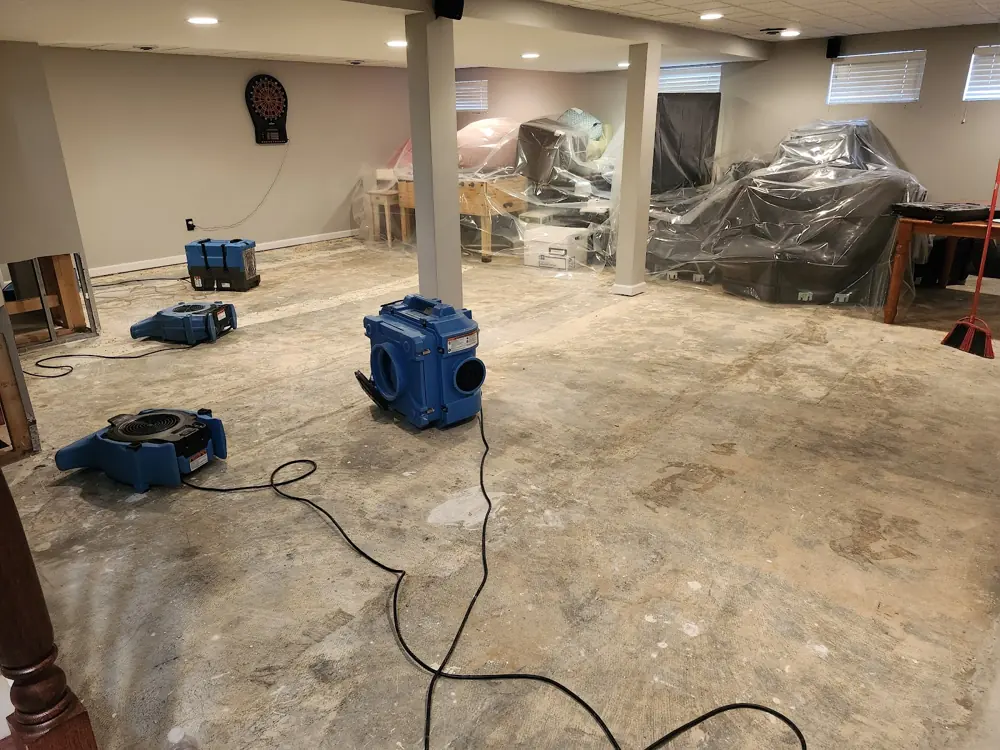
A burst pipe inside a Pittsburgh wall or ceiling can pour gallons a minute into your home before you find the shutoff. Absolute responds within about an hour, IICRC-standard, to stop the spread and dry your home the right way.

Crews confirm the water source is isolated, then extract standing water from floors, walls, and any affected ceilings.
Moisture meters and thermal imaging locate water that has traveled inside walls, floors, and cavities.
Air movers and dehumidifiers dry framing, subfloor, and drywall cavities with daily moisture tracking.
Damaged drywall, flooring, and insulation are removed and replaced once the structure is confirmed dry.

While help is on the way, these first steps, done only where it is safe, limit the damage and protect the insurance claim.
Shut the supply off at the source, or close the home's main valve if the source is not obvious. Stopping the flow limits the damage more than anything else.
Switch off electricity to the affected area, but only if the breaker can be reached without standing in or touching the water.
Get a crew dispatched right away. The sooner extraction and drying begin, the more flooring, drywall, and belongings can be saved.
Take photos and a short video of the water and the affected rooms before anything is moved, so the insurance claim starts strong.
Burst pipe water damage cleanup in Pittsburgh typically runs $2,500 to $10,000, depending on how many rooms or floors were affected and how long the water ran before shutoff. Multi-floor damage from an upper-level burst pushes costs higher. Homeowner policies generally cover sudden pipe bursts, and crews handle documentation for your claim.
Crews reach Pittsburgh and the Pittsburgh metro fast, from Squirrel Hill and Shadyside to Bloomfield, Lawrenceville, Mount Washington, and nearby Mount Lebanon and Bethel Park. See the full list on the areas served across Pittsburgh page.
See all areas servedEvery loss is photographed, measured, and logged from the first visit, so the paperwork holds up with your insurance carrier.
Technicians follow recognized IICRC drying standards and prove the work with daily moisture readings, not guesswork.
Emergency dispatch any hour of the day or night, with a real crew on the way, not a callback in the morning.
A real crew dispatched any hour, not a callback in the morning.
Trained technicians following recognized IICRC drying standards.
Truck-mounted, portable, and submersible for any size loss.
The loss is documented and billed to the carrier directly.
Shut off the main water valve immediately if you can reach it, then call for help. Every minute the water runs adds to the area affected, so stopping the source matters more than trying to mop up on your own.
Pittsburgh sees repeated freeze thaw cycles each winter, and pipes running through exterior walls, attics, or unheated crawlspaces can freeze, crack, and then burst once pressure returns as temperatures rise.
Yes. Water follows gravity and gaps in framing, so it can travel along joists or inside walls well away from the break point. That is why crews use moisture meters to map the full extent before drying.
Most homeowner policies cover sudden and accidental pipe bursts, including the water damage that follows. Damage from a pipe that was clearly neglected for a long time may be treated differently, so documentation matters.
Extraction happens the same day, but full structural drying typically takes 3 to 7 days depending on how much water intruded and how many wall or floor cavities were involved.
Pittsburgh crews are on call 24 hours a day, local and fast, and can be on the way within the hour.
Call (412) 866-1481