A burst supply line under a sink or behind a toilet can spray water across a room in seconds. Absolute's IICRC-standard crews reach most Pittsburgh homes within about an hour to extract and dry the damage.

Crews confirm the water source is fully shut off and extract standing water from flooring and cabinet areas, checking nearby rooms for water that may have traveled further than expected.
Moisture meters check subfloor, cabinet bases, and adjoining rooms or the ceiling below for water that traveled further than it appears, so nothing is left to dry out on its own.
Air movers and dehumidifiers dry the affected flooring, subfloor, and framing until moisture readings are safe, tracking progress daily so you know exactly when the space is dry.
Damaged flooring and cabinet bases are repaired, and crews recommend replacing remaining aging supply lines nearby, since a second failure from an equally old line is common within a year or two.
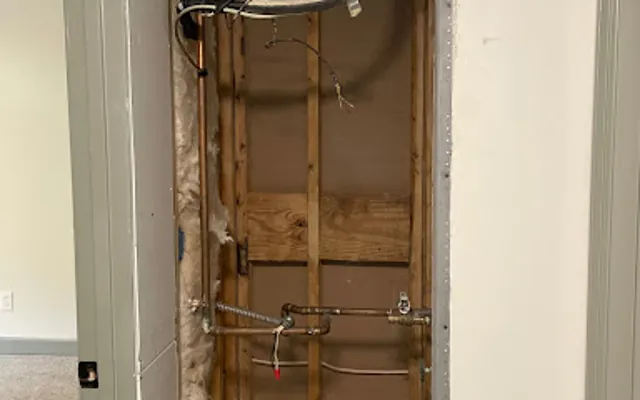
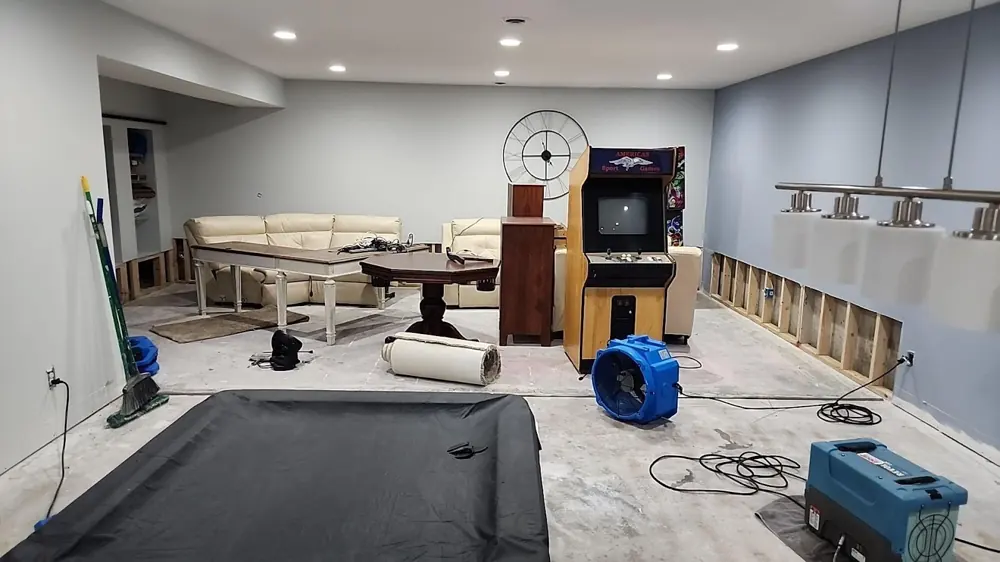
While help is on the way, these first steps, done only where it is safe, limit the damage and protect the insurance claim.
Shut the supply off at the source, or close the home's main valve if the source is not obvious. Stopping the flow limits the damage more than anything else.
Switch off electricity to the affected area, but only if the breaker can be reached without standing in or touching the water.
Get a crew dispatched right away. The sooner extraction and drying begin, the more flooring, drywall, and belongings can be saved.
Take photos and a short video of the water and the affected rooms before anything is moved, so the insurance claim starts strong.
Supply line failure cleanup in Pittsburgh typically runs $500 to $4,000, depending on how much water escaped before the shutoff was found and whether flooring or a ceiling below needs repair. Replacing the failed line and nearby aging lines is a small added cost. Most homeowner's policies cover sudden supply line failures.
Crews reach Pittsburgh and the Pittsburgh metro fast, from Squirrel Hill and Shadyside to Bloomfield, Lawrenceville, Mount Washington, and nearby Mount Lebanon and Bethel Park. See the full list on the areas served across Pittsburgh page.
See all areas servedEvery loss is photographed, measured, and logged from the first visit, so the paperwork holds up with your insurance carrier.
Technicians follow recognized IICRC drying standards and prove the work with daily moisture readings, not guesswork.
Emergency dispatch any hour of the day or night, with a real crew on the way, not a callback in the morning.
A real crew dispatched any hour, not a callback in the morning.
Trained technicians following recognized IICRC drying standards.
Truck-mounted, portable, and submersible for any size loss.
The loss is documented and billed to the carrier directly.
Most manufacturers recommend replacing braided supply lines every 5 to 10 years. If yours are original to the house or show any bulging or corrosion, replacing them ahead of a failure is worth the small cost. A quick visual check twice a year catches most warning signs early.
Behind toilets, under kitchen and bathroom sinks, and behind washing machines are the most common spots, since these lines see constant water pressure and are often overlooked during routine maintenance. Crews check all of them during any supply line service call.
A fully burst line can release several gallons per minute, which adds up fast if no one is home to find the shutoff. That is why crews always check how far the water traveled, not just the immediate area, since even a short delay adds up fast.
Yes, in most cases. Sudden mechanical failures like a burst supply line are typically covered under standard homeowner's policies, and crews document the failure and damage to support your claim. Coverage details can vary, so confirming with your carrier helps.
If several are original and aging together, replacing them all during one visit is often more efficient than waiting for each to fail individually, and it reduces the odds of another emergency call. It is a small cost compared to a repeat cleanup down the road.
Pittsburgh crews are on call 24 hours a day, local and fast, and can be on the way within the hour.
Call (412) 866-1481