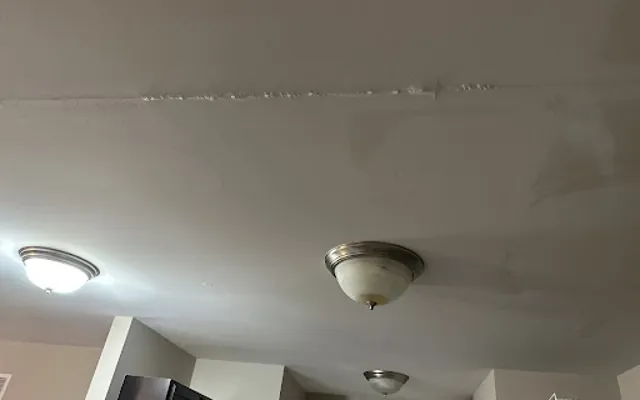
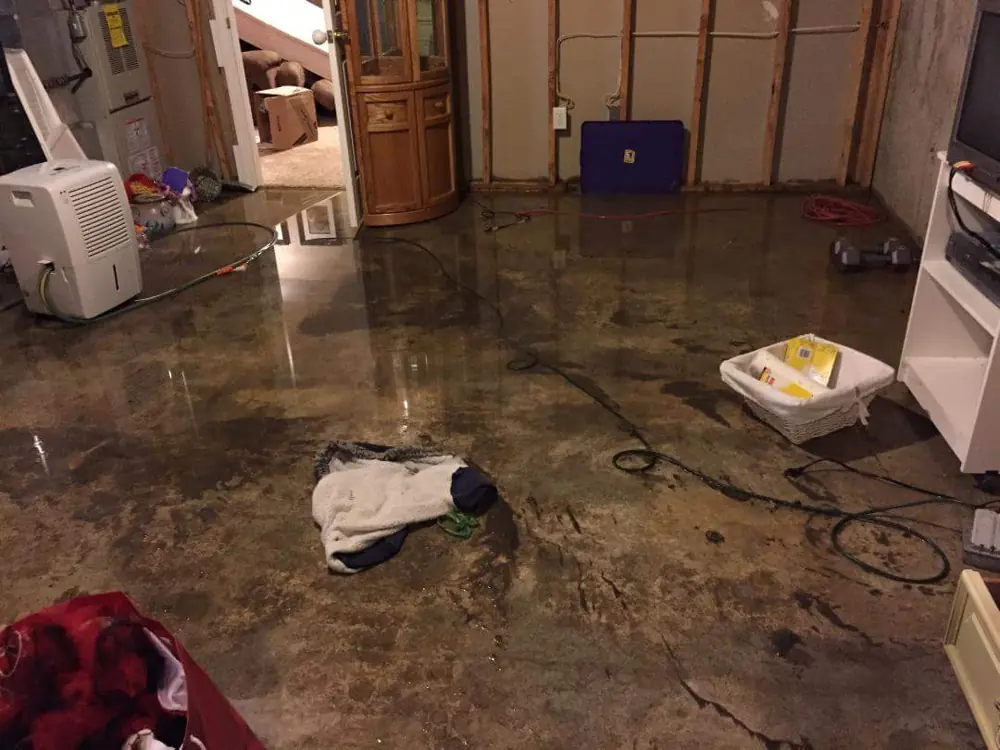
A brown ring on a Pittsburgh ceiling almost always means water is still sitting above the drywall. Absolute responds within about an hour, IICRC-standard, to find the source, dry the cavity, and repair the ceiling correctly.

Crews trace the leak to its actual origin, whether that is the roof, attic, or a fixture on the floor above.
Standing water in the ceiling cavity is removed and drywall is vented or opened as needed to access it.
Air movers and dehumidifiers dry the joist cavity and surrounding drywall with daily moisture checks.
Damaged drywall or plaster sections are cut back, replaced, textured, and painted to match the original ceiling.

While help is on the way, these first steps, done only where it is safe, limit the damage and protect the insurance claim.
Shut the supply off at the source, or close the home's main valve if the source is not obvious. Stopping the flow limits the damage more than anything else.
Switch off electricity to the affected area, but only if the breaker can be reached without standing in or touching the water.
Get a crew dispatched right away. The sooner extraction and drying begin, the more flooring, drywall, and belongings can be saved.
Take photos and a short video of the water and the affected rooms before anything is moved, so the insurance claim starts strong.
Ceiling water damage repair in Pittsburgh generally runs $500 to $4,000, depending on the size of the affected area and whether plaster or drywall is involved. Plaster ceiling repairs in older homes can cost more due to the specialized work. Insurance often covers ceiling damage from a sudden leak or ice dam, and crews document the source for your claim.
Crews reach Pittsburgh and the Pittsburgh metro fast, from Squirrel Hill and Shadyside to Bloomfield, Lawrenceville, Mount Washington, and nearby Mount Lebanon and Bethel Park. See the full list on the areas served across Pittsburgh page.
See all areas servedEvery loss is photographed, measured, and logged from the first visit, so the paperwork holds up with your insurance carrier.
Technicians follow recognized IICRC drying standards and prove the work with daily moisture readings, not guesswork.
Emergency dispatch any hour of the day or night, with a real crew on the way, not a callback in the morning.
A real crew dispatched any hour, not a callback in the morning.
Trained technicians following recognized IICRC drying standards.
Truck-mounted, portable, and submersible for any size loss.
The loss is documented and billed to the carrier directly.
Not always, but you should assume it might be until checked. A stain can be from an old leak that has since been fixed, or it can mean water is currently sitting in the cavity above, which is why crews always test moisture levels first.
That can help release pressure from a large pocket of water and prevent a sudden collapse, but it should be done carefully and is best handled by a professional who can also assess the structure and start drying immediately after.
Yes, especially if the cavity stays wet for more than a couple of days. Crews dry the space quickly and check for early mold growth, treating it if needed before closing the ceiling back up.
Not usually. Most ceiling water damage is limited to a section that can be cut out and patched, matched in texture, and repainted. Full replacement is only needed when a large area has sagged or the material has failed structurally.
Coverage typically applies when the source is sudden, like a burst pipe, ice dam, or fixture overflow. Crews identify and document the source clearly so your adjuster can process the claim properly.
Pittsburgh crews are on call 24 hours a day, local and fast, and can be on the way within the hour.
Call (412) 866-1481